Whitetail Refuge Stream Restoration
2026 – 2027
The BTC is partnering with Nottawasaga Valley Conservation Authority (NVCA) and Freshwater Conservation Canada (FCC; formerly Trout Unlimited Canada) to restore coldwater stream habitat at the BTC’s Whitetail Refuge Nature Reserve in the Caledon Hills section.
Why is this stream restoration needed?
Whitetail Refuge is home to the headwaters of Mono Centre Creek, which is a tributary of the Nottawasaga River. The creek represents coldwater habitat, which is declining across Ontario due to our warming climate and pressures from agricultural, urban, and rural development. Colder water temperatures allow for more oxygen to be dissolved in the water, so many sensitive aquatic species like Brook Trout can only thrive in coldwater systems. The BTC and NVCA have been working to develop a plan to protect this important ecosystem and mitigate the effects of climate change now and into the future. To date, over 3000 trees have been planted by volunteers and NVCA staff to create a riparian corridor along a 600m stretch of the creek, which will shade the water during hot summer weather.
How do the ‘online’ ponds threaten coldwater habitat?
Near the center of the nature reserve are two human-made ponds that were created decades ago by damming two branches of the creek with earthen berms. The upper ‘trout pond’ is fed by a stream originating from a nearby spring, and remains deep and cold. However, the lower pond has filled with sediment over time, and it is now very shallow with a dark bottom, causing water to heat up very quickly. NVCA has conducted water temperature and flow studies over the past several years and has determined that the lower pond causes water to warm by over 4 degrees Celsius on hot summer days. This means that the water exiting the pond into the downstream portion of Mono Centre Creek is significantly warmer than the water upstream. The water is at the threshold of being too warm for cold-water species to survive. As climate change continues to affect the area, temperatures may exceed that threshold, eliminating this vital habitat.
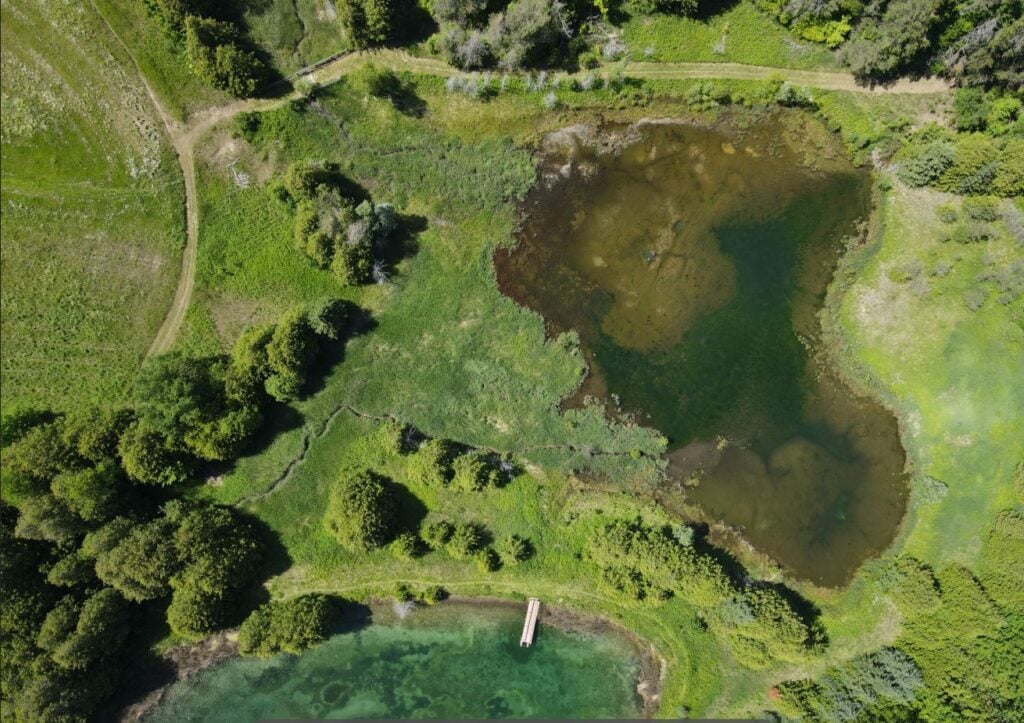 The Whitetail Refuge Nature Reserve contains two ponds created by human-made dams
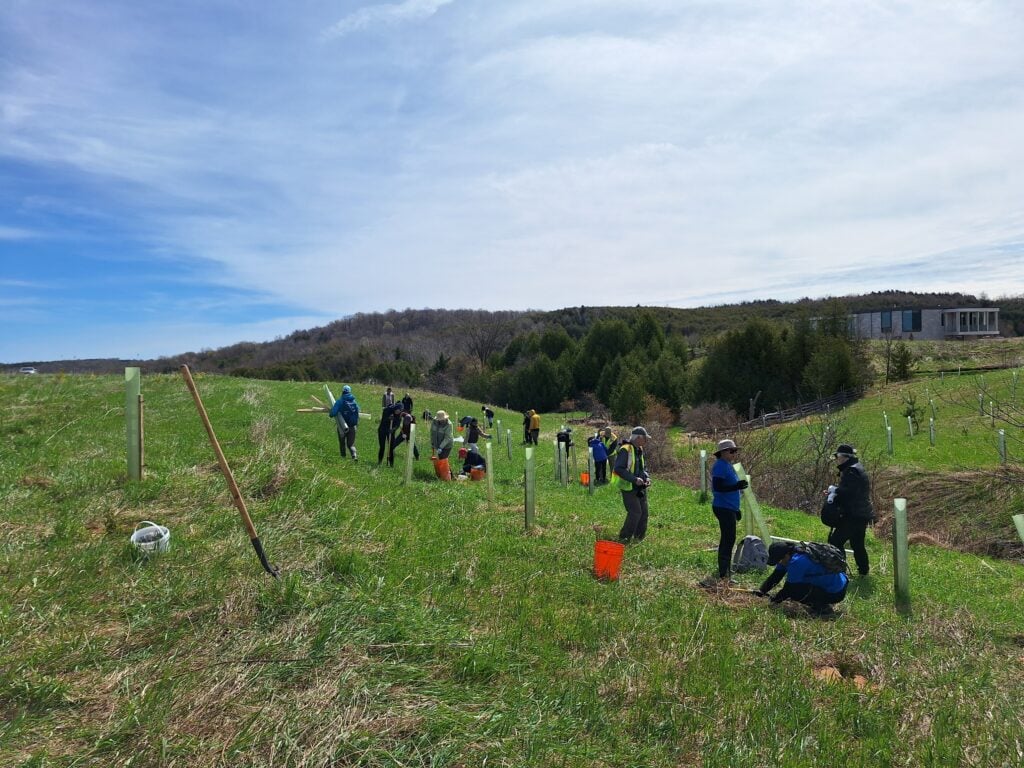 Volunteers join NVCA and BTC to plant trees beside the creek in spring 2025
What is the restoration plan?
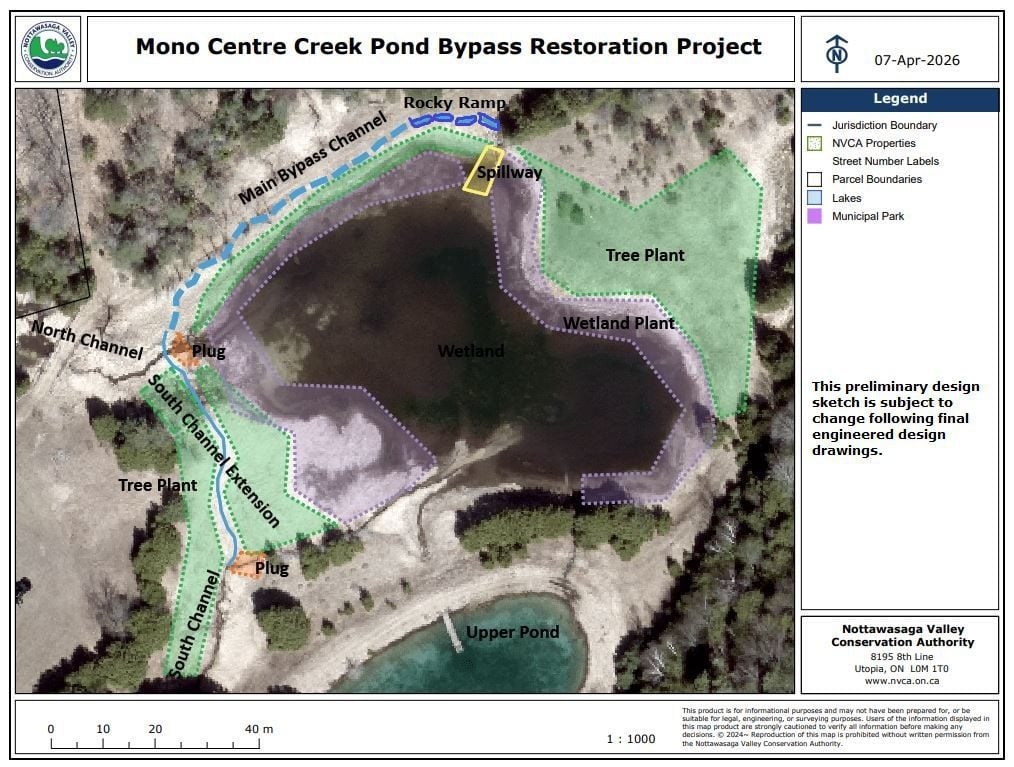
The BTC, NVCA, FCC, and Town of Mono’s Headwater Streams Committee have developed a restoration plan to mitigate the impacts of this lower pond on water temperature and coldwater species, while maintaining valuable wetland habitat for birds, amphibians, and other wildlife. A new creek channel will be constructed along the edge of the lower pond, and the two main branches of the creek will be diverted into this channel, allowing them to bypass the pond and then join the main creek channel downstream of the pond. The lower pond water level will be dropped by approximately 30cm, which will maintain open water and wetland habitat while ensuring the stability of the new creek channel. Additionally, the wooden bridge over the north creek channel along the Springwater Side Trail will be replaced by a new culvert, which will have the added benefit of providing a more stable crossing for the trail after the restoration work is complete. Finally, the edges of the new channel and the lower pond will be planted with a variety of trees and wetland plants to enhance the biodiversity of the area. There will be no changes to the upper ‘trout pond’ or its outflow.
When will it take place?
Volunteer planting events are scheduled for fall 2026 and will continue in spring and fall 2027. If you’d like to participate, visit the Hike Schedule at hikes.brucetrail.org for planting event information and registration. Construction work on the stream channels is expected to begin in June 2027, and this construction phase will last for several weeks. The timing of the project is subject to change depending on funding and logistics
Who will it affect?
This project will require some temporary and permanent impacts to the Bruce Trail on Whitetail Refuge to accommodate the new creek channel and ensure trail users are safe during the creek channel construction. Approximately 190m of the Main Trail will be permanently re-routed before the start of construction, and this new Main Trail route will remain open for the duration of the project, ensuring trail continuity. The Springwater Side Trail has been reopened with a slight change to its configuration.
Wildlife
The restoration project has been designed to minimize impacts to wildlife during the construction phase. The project will take place outside of critical breeding windows for birds, fish, and amphibians. Furthermore, fish rescues will be planned to remove fish from any channel that will be diverted and relocate them to suitable habitat downstream. Monitoring of the fish, bird, and amphibian populations will continue after the creek channel construction is complete.
A Thank You to our Funders
This project is made possible thanks to contributions from TAKLA Foundation, H John McDonald Fund, Headwater Streams Committee, Bruce Trail Conservancy, NVCA, Ontario Community Environment Fund (OCEF), and others.
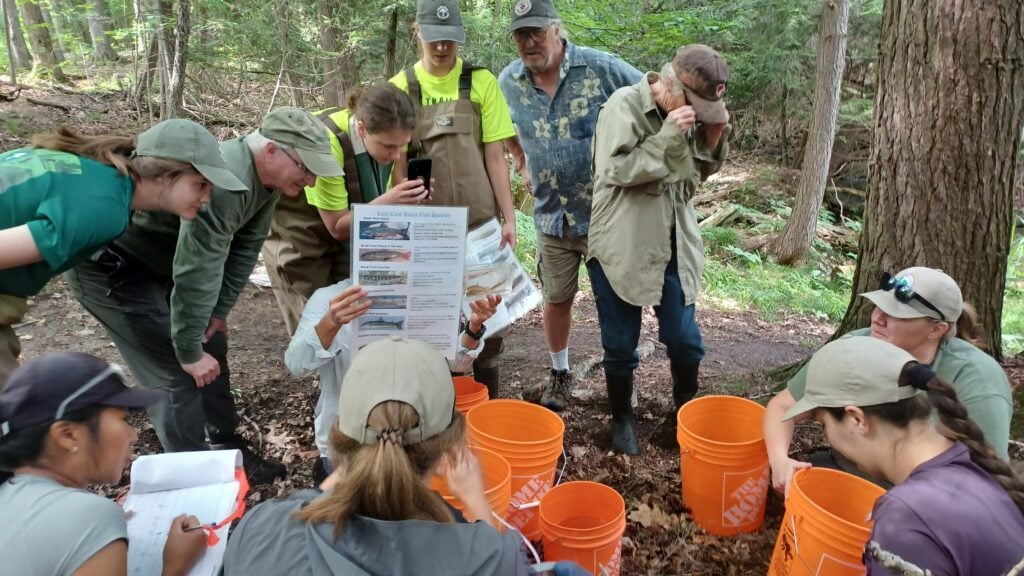 Volunteers gather around to identify, count, and release fish
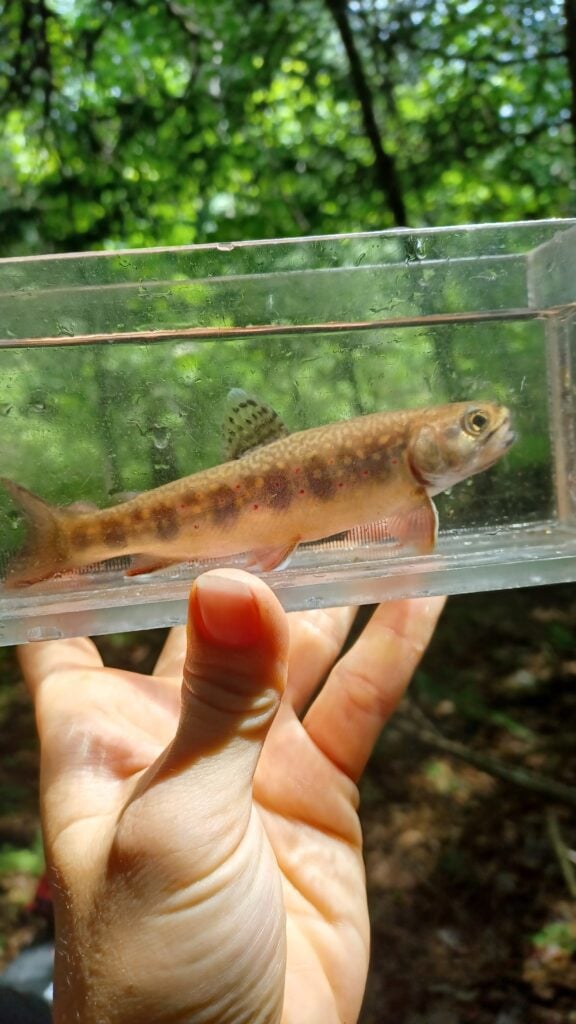 Brook trout found during 2023 fish survey
Questions about the stream restoration?
For more information about the stream restoration, please contact Land Stewardship Coordinator & Ecologist Mara McHaffie at 1-800-665-4453 x225 or email us below.
Project Partners